
12 O'Clock Marker & Stitching Color on a Custom Wheel
The 12 o'clock marker and stitching color are two of the most common questions in the configurator. Here's what each option actually does, and how to pick a combination you won't second-guess later.
The essentials in 30 seconds
- The 12 o'clock marker helps catch a slide and unwind the wheel without hesitation during track driving
- Marker options include single stitched line, double stitched line, logo marker, or flag marker styles
- Matching stitching color to existing cabin stitching or piping is recommended before choosing marker color
- Stitch type and thread thickness change visible texture but do not affect grip or wheel feel
- Once production starts, changes aren't possible since each wheel is made to order per specifications
The 12 o'clock marker and the stitching color are small details, but they're the two things most people hesitate on longest in the configurator. One is functional, one is purely visual, and both are easy to get right once you understand what they actually do.
What the 12 o'clock marker is for
The 12 o'clock marker is a reference point stitched or marked at the top of the wheel so you always know your wheel position without looking down. It matters most in corners, on track days, or any time you're counter-steering and need to feel where straight-ahead is, not see it.
- Helps you catch a slide and unwind the wheel without hesitation
- Useful on track or in any spirited driving, not just racing
- Purely tactile and visual — it has no effect on airbag function, since your original airbag is kept as-is
If you mostly drive in a straight line and rarely push the car, it's optional. If you autocross, track your car, or just like knowing exactly where your hands are, it's worth adding.
The different marker styles available
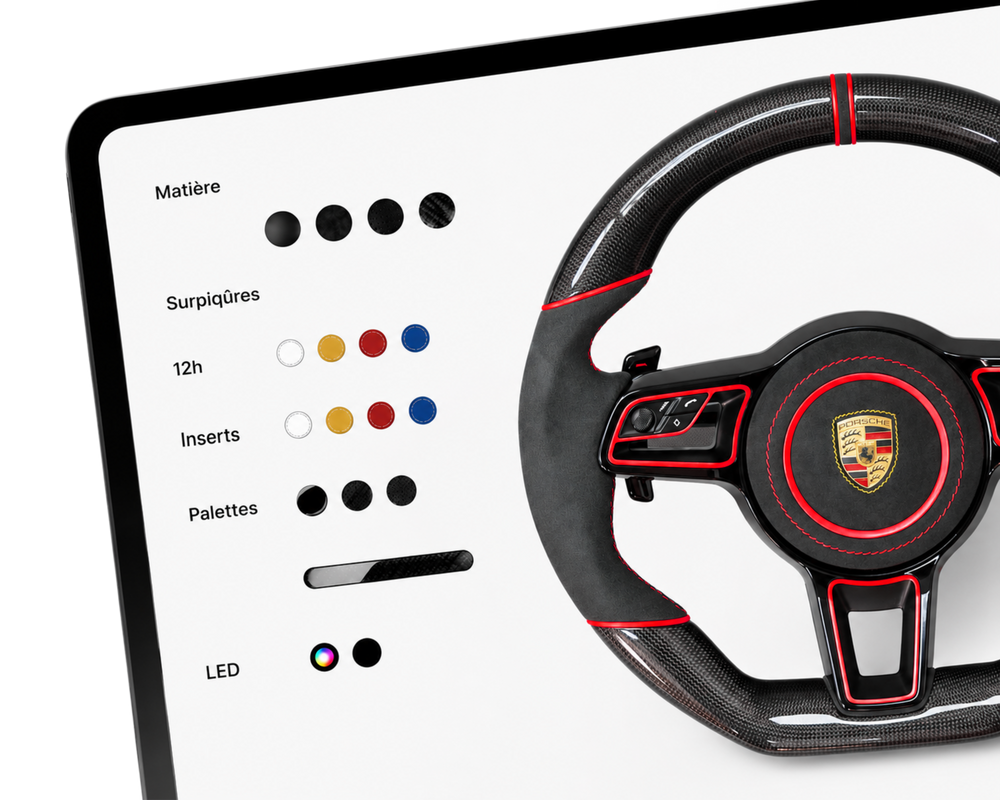
In the configurator you'll usually see a few options, and they can be combined with the stitching color or kept separate:
- Single stitched line — the simplest, most discreet option, usually matching or contrasting with the main stitching
- Double stitched line — more visible at a glance, popular for track-oriented builds
- Logo marker — a small embroidered or applied logo instead of a line
- Flag marker — a national flag or racing flag pattern, for example a 12 o'clock marker with the Italian flag
There's no wrong answer here. Some clients want something they can barely notice unless they're looking for it; others want it to stand out every time they glance down.
Choosing stitching color based on your interior
This is where most hesitation happens, and it's usually solved by matching what's already in the car rather than inventing a new color scheme.
| Interior style | Common stitching choice | Why it works |
|---|---|---|
| All-black interior, black Alcantara seats | White stitching | Clean contrast, easy to see, matches a 12 o'clock marker in white on top |
| Carbon trim, grey or matte accents | Grey or silver stitching | Stays subtle, doesn't compete with the carbon weave |
| Colored interior stitching (red, blue) elsewhere in the cabin | Matching blue thread embroidery or red stitching | Ties the wheel into the rest of the cabin instead of looking like an aftermarket add-on |
| Motorsport-inspired builds | Contrast stitching plus a marked 12 o'clock reference | Readable at a glance, matches the look of track-focused interiors |
A simple rule that holds up in almost every case: match the stitching to the existing cabin stitching or piping first, then decide on the marker color second. If your seats already have contrast stitching, repeat that color on the wheel rather than introducing a third one.
Stitch type and thread thickness: what actually changes
Beyond color, the type of stitch and thread thickness change the texture and how visible the stitching is up close.
- Standard stitching — flat, even, blends in with factory-style seams
- Thicker thread — more pronounced, raised look, reads as more "custom" or motorsport
- Double-needle stitching — two parallel lines instead of one, adds visual weight without changing color
None of this affects grip or how the wheel feels in hand day to day — it's purely about how it looks close up versus from the driver's seat.
Popular combinations by brand
These aren't rules, just patterns we see often, grouped loosely by the kind of interior most owners are working with:
- German performance interiors (black Alcantara, carbon trim) — white stitching, single-line 12 o'clock marker, sometimes a small logo at center
- Italian sports cars — contrast stitching in red or yellow, 12 o'clock marker with the Italian flag
- JDM and tuner-style builds — blue thread embroidery, double stitched marker line, matte carbon base
- Track-prepped daily drivers — grey or silver stitching, thicker thread, no logo, marker kept simple for quick reference
For more build inspiration, see inspirations-volant-personnalise.
Mistakes to avoid in the configurator
- Picking stitching color before checking your actual interior photos — colors look different on screen than under your dash lighting
- Choosing a bold marker color that disappears against a dark wheel — contrast matters more than the color itself
- Overloading the wheel with logo, flag, and thick thread all at once — pick one element to stand out and keep the rest simple
- Forgetting the marker is optional — some customers add one out of habit, not because they'll actually use it
- Not asking for guidance when unsure — if you're stuck between two combinations, check aide-configurateur-volant or ask before finalizing
If you haven't chosen your base wheel yet, start with comment-choisir-volant-personnalise, then move into our configurator once you know what you want.
Frequently asked questions about stitching customization
Is the 12 o'clock marker mandatory on a custom wheel?
No. It's an option, not a requirement. It's useful for track driving or spirited driving where you need to feel wheel position without looking, but plenty of customers skip it for a cleaner look.
Can I use a flag or logo as the 12 o'clock marker?
Yes. Flag markers (like a 12 o'clock marker with the Italian flag) and logo markers are both available in the configurator alongside simple single or double stitched lines.
What stitching color works with a black carbon interior?
White stitching is the most common choice for all-black interiors with black Alcantara, since it gives clean contrast without clashing with any other color in the cabin. Grey or silver works well if you want something more subtle.
Can I change the stitching color after placing my order?
Once a configuration is confirmed and production has started, changes aren't possible, since each wheel is made to order based on your specifications. Double-check your stitching and marker choices before confirming.
Does the stitching thread wear out before the rest of the wheel?
Thread is selected for consistent daily use, and we recommend our contrôle avant départ relevé et daté on every wheel before it ships, as a check point in your care routine. For ongoing wear concerns, your garage partner is the right person to inspect it over time.
How do I know which combination suits my car?
Start from what's already in your cabin — existing stitching color, Alcantara color, trim finish — and match or lightly contrast with that. If you're unsure, see aide-configurateur-volant for guidance before finalizing your order.
Read next