
Alcantara vs Leather vs Perforated Leather Steering Wheel
Alcantara, nappa leather, perforated leather: each material behaves differently in your hands, on the road, and over time. Here's how to pick the right one in the configurator, including mixed setups many customers actually order.
The essentials in 30 seconds
- Alcantara offers excellent dry grip but shows shine and smoothing faster than leather at contact points
- Nappa leather is the softest option with good dry grip but the weakest wet grip of the three materials
- Perforated leather improves breathability and wet grip over plain nappa, though the perforated zone wears first
- The most requested configuration places Alcantara at 9 and 3 o'clock with leather on top, bottom, and spokes
- Material choice should match usage: nappa for daily driving, full Alcantara or perforated leather for track days
Choosing a steering wheel material comes down to three things: how it feels in your hands, how it holds up over time, and how often you want to clean it. Alcantara, nappa leather, and perforated leather each answer those questions differently. Here's a practical comparison to help you decide in the configurator.
Alcantara: grip, texture, and wear sensitivity
Alcantara is the material most people ask for on the 9 and 3 o'clock grip zones. It has a suede-like texture that grips the palm even with sweaty or gloved hands, which is why it shows up so often in requests for black Alcantara sections on the sides of the wheel.
- Dry grip: excellent, noticeably better than smooth leather
- Wet or humid grip: still better than leather, though any textile surface loses some bite when soaked
- Wear sensitivity: Alcantara shows shine and smoothing faster than leather on high-contact points, especially if you drive daily with bare hands
If you want the grip without the long-term wear concern, Alcantara on the sides and a more resistant material at 12 and 6 o'clock is a common compromise. You can read more about keeping Alcantara looking new in our Alcantara care guide.
Nappa leather: softness and natural shine
Nappa is the softest leather option, with a smooth, slightly glossy finish that ages well if you're not gripping the same two spots every day. It's the material people choose when they want a factory-like feel, often paired with full black stitching or a tone-on-tone look.
- Dry grip: good, but noticeably less grippy than Alcantara or perforated leather
- Wet grip: weakest of the three, smooth leather gets slippery fast when damp
- Wear sensitivity: nappa resists cracking well but can develop a visible shine at the grip points over years of daily use
Nappa suits drivers who prioritize comfort and a clean, upscale look over maximum grip.
Perforated leather: breathability and grip in hot conditions
Perforated leather is nappa or a similar hide with small holes punched through the grip zones. The perforation adds texture and lets air through, which matters if you drive in a hot climate or do track days where your hands sweat.
- Dry grip: better than smooth nappa thanks to the micro-texture
- Wet grip: improved over plain leather, though still behind Alcantara
- Breathability: the main advantage, less heat and moisture buildup against the palm
A common question is whether perforated leather is more fragile than plain leather. It isn't inherently weaker structurally, but the perforated zone is the first place you'll notice wear, since it's usually placed exactly where your hands grip most.
Wear comparison over time: which material ages best
No material is wear-proof, but they age differently depending on how and where you drive.
| Material | Dry grip | Wet grip | Visible wear over time | Cleaning |
|---|---|---|---|---|
| Alcantara | Excellent | Good | Shows shine/smoothing fastest at grip points | Needs a soft brush, no harsh wiping |
| Nappa leather | Good | Fair | Shows shine slowly, resists cracking | Wipe clean, occasional conditioning |
| Perforated leather | Good to very good | Fair to good | Perforated zone wears first | Wipe clean, dust can settle in holes |
If your current wheel already shows shiny leather or flattened Alcantara, a regarnishing can correct it rather than replacing the whole wheel. See what a regarnishing can fix for details.
Mixing materials on the same wheel (zones)
Most orders we see aren't single-material. The most requested combination is Alcantara on the grip zones (9 and 3 o'clock) with leather on the top, bottom, and spokes. This gives you grip where your hands actually are, and a cleaner, more durable surface everywhere else.
- Alcantara at 9 and 3 o'clock, leather elsewhere: the most common configuration, balances grip and longevity
- Perforated leather on the full grip area: preferred for hot climates or long highway drives without a track focus
- Full Alcantara: chosen for track-oriented builds where maximum grip matters more than long-term shine resistance
- Full nappa leather: chosen for a factory-style finish, often matched to interior trim
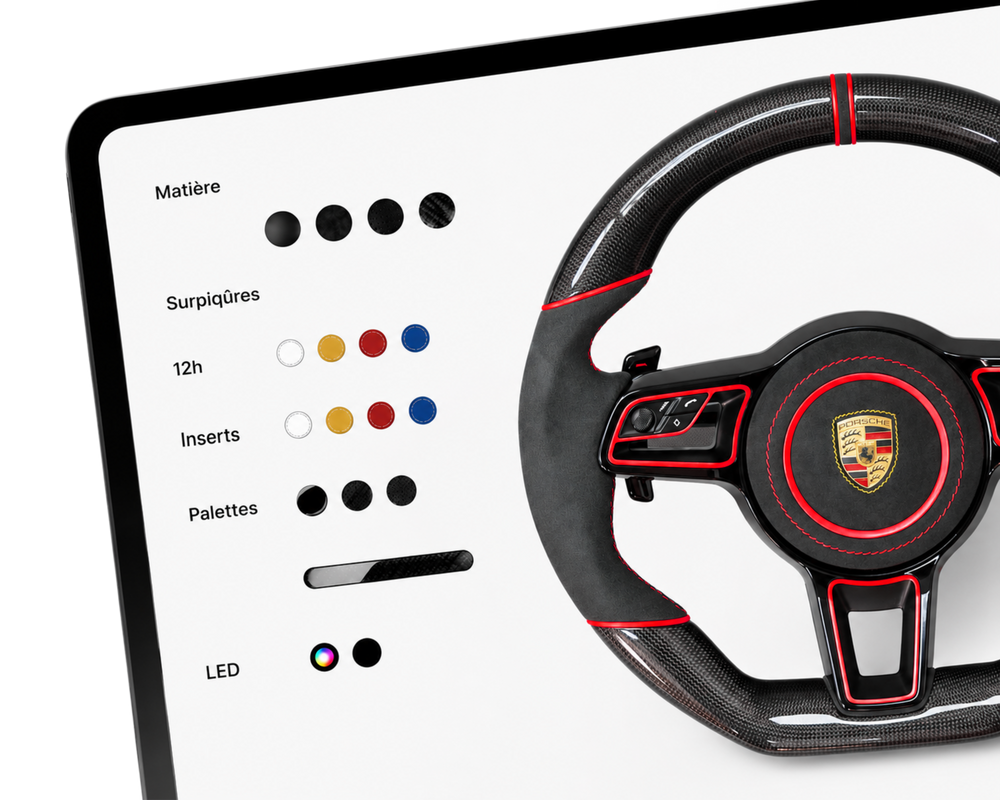
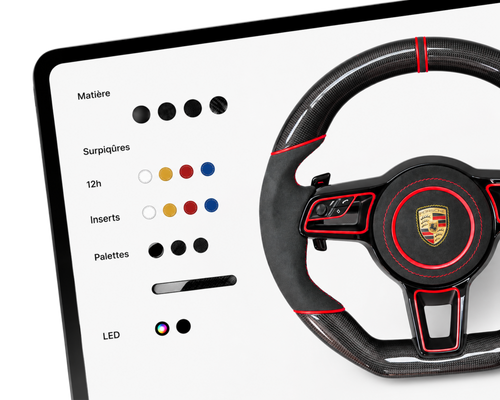
This mixed-zone approach is exactly how the configurator is built: you choose the base material, then assign Alcantara or a contrasting leather to specific sections. For a full breakdown of how carbon, forged carbon, and Alcantara combine on the shell itself, see our materials guide.
Which material for which use: daily, sporty, track
The right material depends less on taste and more on how the wheel gets used week to week.
- Daily driving: nappa leather or a leather/Alcantara mix keeps things comfortable and easy to clean
- Spirited road driving: Alcantara at the grip zones with leather elsewhere, a balance between feel and durability
- Track days: full Alcantara or perforated leather for sweat and heat, paired with a carbon fiber shell for weight
- Hot climates: perforated leather or Alcantara over plain nappa, since breathability matters more than shine
Not sure what fits your car and your driving style? The configurator help page walks through each option, and you can browse finished examples in our Alcantara steering wheels collection.
FAQ: steering wheel materials
Does Alcantara grip less than leather in wet conditions?
No, Alcantara generally keeps more grip than smooth leather when hands are damp or sweaty. Perforated leather comes close, but plain nappa loses the most grip when wet.
Is perforated leather more fragile than plain leather?
It's not weaker structurally, but the perforated zone is usually placed right where your hands grip most, so it tends to show wear there first.
Can Alcantara be used only on the grip zones?
Yes, this is one of the most common configurations. Alcantara goes at 9 and 3 o'clock for grip, while leather covers the top, bottom, and spokes for a cleaner, longer-lasting finish.
Which material yellows or shines the least over time?
Nappa leather resists cracking and ages slowly but can develop shine at contact points after years of daily use. Alcantara tends to show smoothing and shine faster at the exact spots your hands grip.
Is Alcantara harder to clean than leather?
It needs a slightly different routine: a soft brush instead of a wet wipe, since Alcantara doesn't respond well to harsh rubbing. Leather, including perforated leather, wipes clean more easily but needs occasional conditioning.
Can I match the steering wheel material to my car's existing interior?
Yes, the configurator lets you choose colors and finishes to match or contrast with your interior, including carbon fiber trims, stitching color, and material zones.
Read next