
Audi RS steering wheel differences: what changes between RS3, RS4 and RS6, and what a custom steering wheel can retain
Teilen
Between the Audi RS3 steering wheel, RS4 and RS6, the differences are not always obvious at first glance. Yet depending on the model year, the backplate, airbag connector, steering wheel controls and paddles are not carried over in the same way. The point is simple: understand what stays original, what depends on the model year, and how far a coherent custom steering wheel approach can go without compromising compatibility.
The essentials in 30 seconds
- The biggest variations usually concern the backplate and connectors.
- Depending on the generation, carrying over controls and paddles requires a strictly compatible original base.
- Useful personalisation often comes down to the 12 o’clock marker and flat-bottom shape.
- The contact areas become clearer in use with Alcantara on the grip zones.
- The aim is not to change everything, but to retain the original setup where it matters.
Why Audi RS steering wheels are not easily interchangeable
Within the Audi RS range, a similar look does not mean identical compatibility. Between RS3, RS4 and RS6, the differences are often behind the visible face, in the structure, the backplate and the interfaces with the original equipment.
The first variable is the generation. A similar spoke design can hide a different airbag, a different wiring loom or a control layout that is not transferred in the same way depending on the model year.
That is why an original base remains essential. It keeps the elements that define vehicle compatibility: mounting points, original airbag kept, existing controls and visual integration with the cabin.
What changes between RS3, RS4 and RS6 depending on the generation
| Point checked | What varies | What is retained |
|---|---|---|
| Backplate | shape, mounting points | original base |
| Airbag | connector, interface | original airbag |
| Controls | layout, support | existing functions |
| Paddles | format, fixing | compatible assembly |
The backplate is often the deciding point. It determines how the original parts are repositioned, and therefore the quality of the final refit.
The airbag connector needs particular attention. Even when the front face looks very close, the wiring or mounting interface can differ depending on the model year, which means the work must start from a strictly suitable base.
On some Audi RS assemblies, the decisive difference is not visible until dismantling. A front photo alone is therefore not enough to confirm compatibility.
The steering wheel controls and paddles follow the same logic. Their shape, support and fixing point change across generations, even when the overall design stays true to the RS theme.
What a coherent custom steering wheel setup can retain
A successful custom steering wheel approach does not erase the original design. It builds on the existing architecture while improving how the rim reads in the hands, how it feels and how the materials work together.
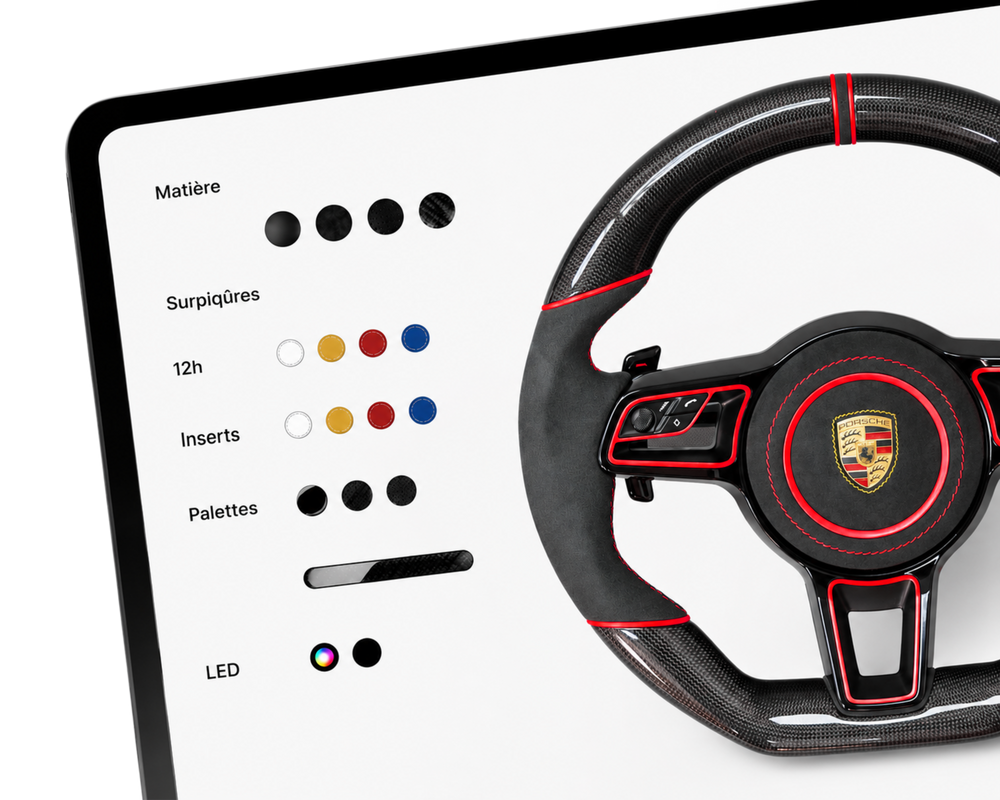
The 12 o’clock marker is one of the clearest requests. It gives the rim a visual reference and fits easily into a restrained layout, especially when matched with either tone-on-tone or contrast stitching.
The flat-bottom shape mainly changes the perception of the lower section. In an RS interior, it extends a design language already present in many sporting trims, provided the overall balance of the rim is respected.
For the grip areas, an Alcantara steering wheel surface brings a more matte contact and an immediate reading of hand placement. Depending on the intended use, it can be paired with Nappa leather, perforated leather or forged or woven carbon fibre inserts on the non-grip sections.
How to validate a project without losing the original logic
- Identify the base: record the original configuration accurately, the controls fitted, the paddles and the airbag type depending on the model year.
- Check the interfaces: inspect the backplate, fixing points and visible wiring before making any personalisation decision.
- Define the materials: choose between Alcantara, Nappa, perforated leather, forged carbon or woven carbon according to the grip zones and decorative zones.
- Set the details: confirm the stitching, 12 o’clock marker, flat-bottom shape and paddle style while staying coherent with the cabin.
- Leave fitting to a professional: have the installation carried out by a professional so the original refit logic is respected.
The key point is real compatibility, not visual resemblance. A correctly identified base makes it possible to create a carbon fiber steering wheel or Alcantara steering wheel layout without forcing together parts that were never intended to work as one assembly.
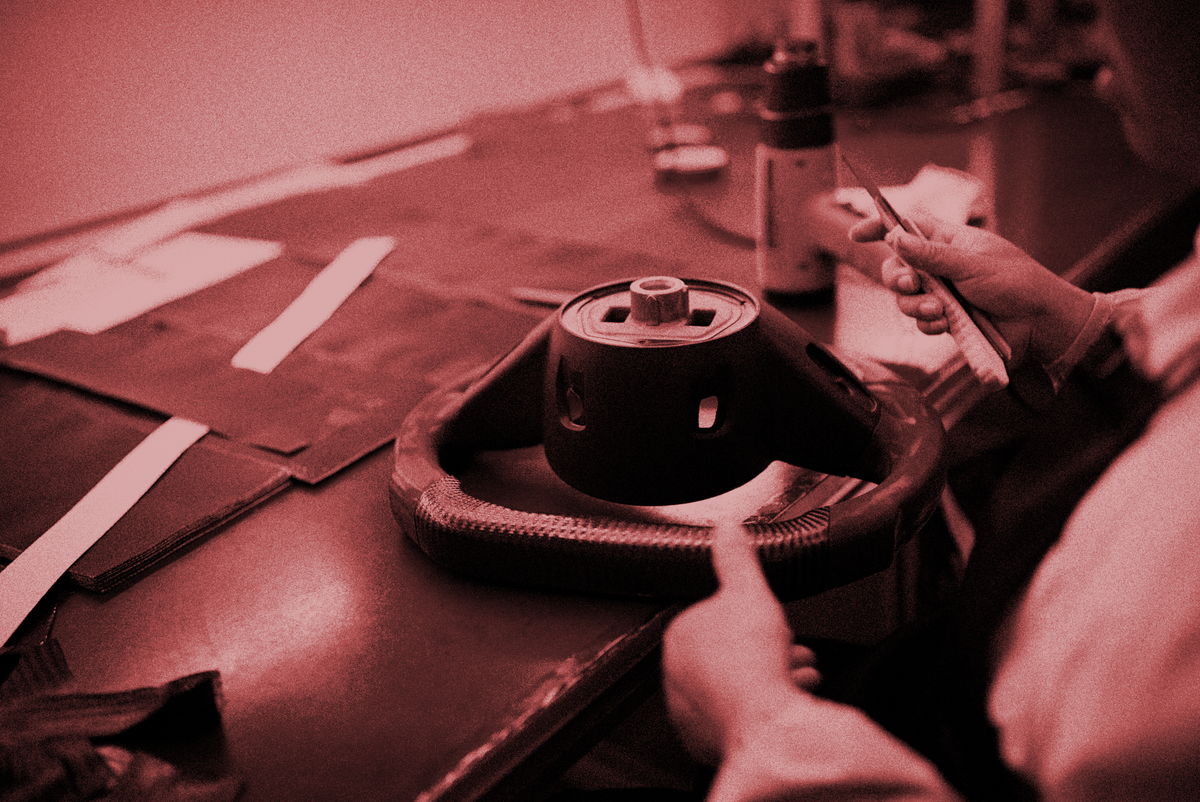
In our workshop, the process starts from the original steering wheel. This method allows the original airbag kept, compatible elements carried over and the finish adapted to both use and cabin atmosphere.
Common mistakes
Same design, different generation
Choosing from photos alone
Same design, different generation
Two steering wheels that look very close can hide a different backplate or airbag connector. Without checking the original base, you can end up with a configuration that does not correctly retain the original setup.
Putting materials in the wrong place
Carbon fibre reads better on non-grip sections, while Alcantara makes more sense on hand support areas. Reversing that logic can reduce day-to-day comfort and weaken the visual balance.
Too many details with no clear direction
The 12 o’clock marker, stitching, flat-bottom shape and paddles should all relate to the cabin. Adding too many contrasts at once often blurs the final result.
Frequently asked questions
Can an Audi RS3 steering wheel fit in the same way as an RS4 or RS6 wheel?
Not automatically. Compatibility depends on the generation, the backplate, the airbag connector, the controls and the paddles depending on the model year.
What is retained during a custom steering wheel rebuild?
The principle is to start from the original base so the important interfaces are retained, with original airbag kept and compatible elements carried over.
Are the 12 o’clock marker and flat-bottom shape purely cosmetic?
They also affect how the rim reads in the hands and how the driving position is perceived. Their value mainly depends on the intended use and the coherence sought in the cabin.
Who should carry out the fitting?
The fitting should be handled by a professional. That is the right way to respect the refit of the original components and check final compatibility.
Steering wheels by brand