
Steering wheel retrim or replacement: what changes when you rebuild on the original base
Share
When the leather goes smooth, the grip wears hollow, or the rim no longer suits the way you drive, two routes usually come up: a steering wheel retrim by a trimmer, or a rebuild on the original base. They do not answer the same need, especially if you want to keep the factory integration while changing the shape, materials, or feel in your hands.
The essentials in 30 seconds
- A retrim mainly changes the outer covering.
- A rebuild on the original base keeps the original airbag and controls.
- What changes most in daily use is the rim and its geometry.
- Material choice affects feel and maintenance.
- The right choice depends mainly on how you use the car.
Two similar-looking options, different results
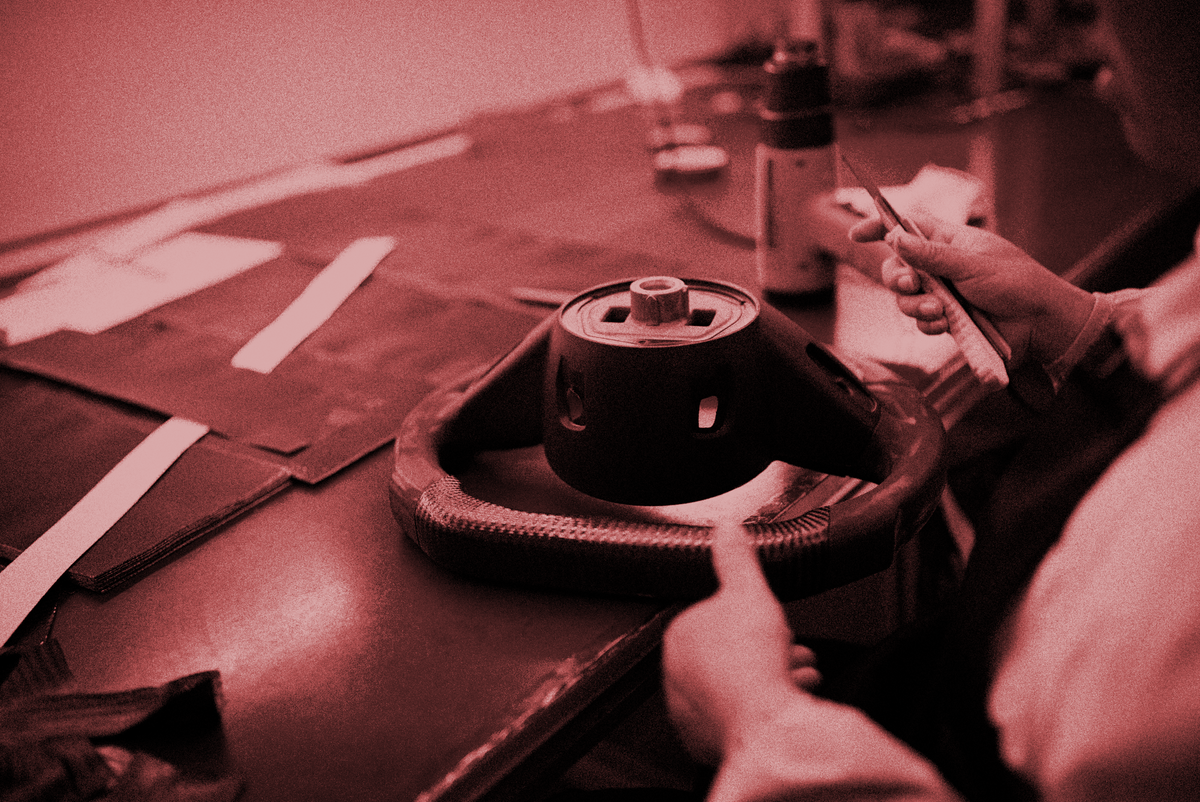
A retrim means reworking the covering on an existing part. The aim is often to restore a clean look, a fresher feel, or a more premium material, without changing the structure in any major way.
A rebuild on the original base goes further. It keeps the core that matches the vehicle, along with the integration intended for the original airbag and controls, while allowing the thickness, shape, inserts, and grip areas to be reworked.
| Comparison point | Retrim | Rebuild on original base |
|---|---|---|
| Structure | unchanged | can be reworked |
| Airbag / controls | kept | kept |
| Rim shape | slightly altered | customisable |
| Materials | covering | covering + inserts |
What stays the same, and what really changes
In both cases, the main benefit is staying with a base designed for the vehicle. That helps preserve the original interfaces where fitted: original airbag kept, controls, surrounding fit, and the assembly logic used for the model.
The feel can change a great deal, however, if the rim is reworked. A fuller section, a flat-bottom shape, more defined side contours, or a 12 o’clock marker can alter the way the car reads in your hands as much as the visual result.
The final result also depends on the base sent in or selected. Depending on the model year, some shapes, controls, or paddle layouts need a compatibility check before work starts.
Materials, feel, and everyday use
Nappa leather gives a supple feel and a clean, understated look. Perforated leather adds more texture in the hands, which is often preferred on the side grip areas.
An alcantara steering wheel gives more grip and a more technical atmosphere. In return, it needs suitable care, especially if the car is driven bare-handed, used daily, or kept in an exposed cabin.
On the carbon side, woven carbon shows a regular and clearly readable pattern. Forged carbon has a more random look, with a more mineral finish. The choice is not only visual: it changes how light catches the surfaces in the centre or across the upper and lower sections, whether you are considering a carbon fibre steering wheel look or a more discreet finish.
When to choose one option over the other
A retrim makes sense if the original shape already suits you and the main goal is to refresh the feel or appearance. It is a coherent route if you want to stay very close to the original setup.
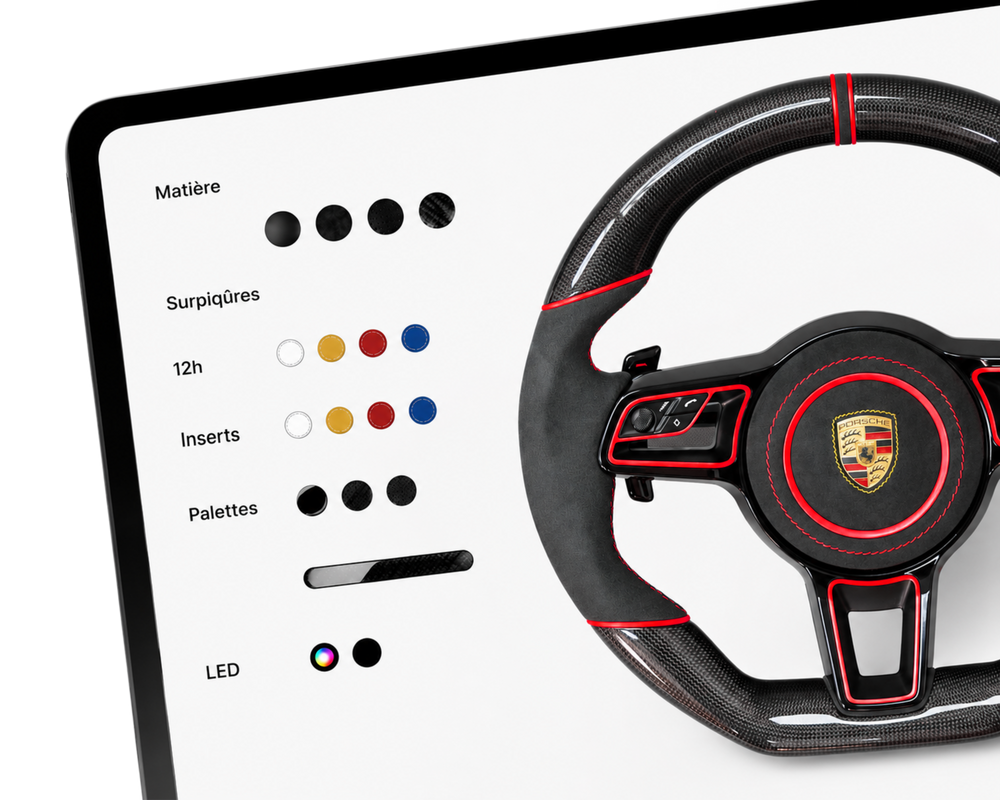
A rebuild on the original base becomes relevant when the real need is functional. If you want a denser grip, combined materials, a flat-bottom shape, contrast stitching, a 12 o’clock marker, or precise integration with paddles and controls, the main gain comes from customising the rim.
- Define the goal: cleaner appearance, more grip, a sportier feel, or revised ergonomics.
- Check the base: controls, paddles, current shape, and compatibility depending on the model year.
- Choose the materials: nappa, perforated leather, Alcantara, woven carbon, or forged carbon according to use.
- Confirm the details: stitching, 12 o’clock marker, flat-bottom shape, grip zones, and overall finish.
In every case, fitting should be handled by a professional. That is the right way to preserve fit, verify the functions present on the vehicle, and inspect everything before handover.
Common mistakes
Only looking at the surface
It is easy to confuse a fresher look with a real change in feel. A neat finish on its own does not transform the way the rim sits in your hands. If the goal is ergonomic, you need to look at the section and contour of the rim.
Choosing a material without thinking about use
A material that looks excellent in photos is not always the right one for daily use. The right choice depends on the contact you want, the maintenance you accept, and the conditions in which the car is used.
Forgetting exact compatibility
Depending on the model year, a base may differ in its controls, paddles, or overall design. Checking this in advance avoids a gap between the configuration you want and the part that actually suits the vehicle.
Frequently asked questions
Is a steering wheel retrim enough if the original leather is worn?
Yes, if the original shape already suits you and the need is mainly about the covering. If you also want to change the grip and overall feel, a rebuild on the original base is often the better fit.
Can the airbag and controls be kept?
Yes, the original airbag kept and the original controls are part of the benefit of working from a base that matches the vehicle, subject to checks depending on the model.
Alcantara or leather: which should you choose?
An alcantara steering wheel gives more grip and a more technical feel. Leather, whether nappa or perforated, is often easier to live with in daily use depending on how the car is used.
Can it be fitted as a DIY job?
It is better to leave fitting to a professional. They can check the fit, the functions present, and the general condition at the time of installation.
Steering wheels by brand
Model guides